






Itchy, red, or swollen skin? Histamine might be the culprit. This natural chemical helps your body in many ways, but when it builds up—whether from sensitivities, certain foods, or histamine intolerance—it can trigger uncomfortable skin reactions. From soothing remedies and smart food swaps to helpful supplements and daily habits, you’ve got plenty of tools to calm the itch and support your skin—naturally.
What Is Histamine and Its Role in the Body?
Histamine is a natural chemical found in your body. It helps with many important jobs.
For example, histamine helps your stomach make acid to digest food. It also helps your brain send signals and your immune system fight off germs.1,2,3
But histamine is best known for its role in allergies.

When your body thinks something is dangerous—like pollen, pet dander, or certain foods—it releases histamine. This causes blood vessels to expand and the skin to become red, swollen, and itchy.1,2,3
Histamine works by attaching to special spots on cells called “receptors.”
There are four main types of receptors: H1, H2, H3, and H4. Each type does something different in the body, but H1 and H4 are especially important in causing itch and inflammation in the skin.1,2,3
What Are 5 Common Causes of Histamine-Itchy Skin?
Itchy skin from histamine can happen for many reasons.
Here are 5 of the most common:
- Reactions to sensitivities: When your body reacts to things like pollen, dust, or certain foods, it releases histamine. This can make your skin itchy and red.1,3
- Insect bites or stings: Your body releases histamine to fight the venom, which causes itching and swelling.
- Skin conditions: Problems like eczema, hives, or atopic dermatitis are linked to higher histamine levels in the skin.4,5
- Certain foods: Some foods have a lot of histamine or can trigger your body to release more. Examples include aged cheese, cured meats, tomatoes, and some fish.4,5
- Medications: Some medicines can cause your body to release more histamine or make it harder to break it down.
What Are the Symptoms of Histamine-Itchy Skin?

When your skin reacts to histamine, you might notice:
- Itching (pruritus): This is the most common symptom.4,6
- Redness (flushing): Your skin may look red or feel warm.
- Swelling (edema): Sometimes, the skin puffs up or looks swollen.
- Hives (urticaria): These are raised, red, itchy bumps that can show up anywhere on the body.
- Rash or eczema: Some people get dry, flaky patches or a rash.4,6
- Other symptoms: In some cases, you might also have stomach problems, headaches, or a runny nose if your body has too much histamine.4,6
How Does Histamine Intolerance Affect Your Skin?
Histamine intolerance happens when your body can’t break down histamine fast enough.
This can be because your body doesn’t make enough of an enzyme called “diamine oxidase (DAO),” which helps get rid of extra histamine.4,6,7
When histamine builds up, you can get itchy skin, hives, redness, and other sensitivity symptoms—even if you’re not allergic to anything. If you have a histamine intolerance, you may have other symptoms, too, like headaches, stomach pain, or flushing.4,6,7
Some skin conditions, like atopic dermatitis, are linked to high histamine levels. In these cases, avoiding foods and things that trigger histamine can help reduce symptoms.5
How Will Your Healthcare Practitioner Diagnose What’s Causing Your Itchy Skin?

Your healthcare practitioner may use a few different ways to find out if histamine is causing your itchy skin:
- Medical history: Your practitioner will ask about your symptoms, when they happen, and what might make them worse.
- Skin prick test: A tiny amount of histamine is put on your skin to see if you react. If the bump (called a wheal) stays bigger for longer than normal, it might mean you have trouble breaking down histamine.7,8
- Blood tests: These can check for DAO enzyme levels or measure histamine in your blood.7
- Elimination diet: Sometimes, your practitioner might suggest avoiding high-histamine foods for a few weeks to see if your symptoms improve.6
What Are 4 Natural Ways to Support a Healthy Histamine Response and Skin Comfort?†
Here are 4 natural ways to help support your comfort when you want calm, comfortable skin:
- Cool compresses: Placing a cold, damp cloth on itchy skin can help reduce swelling and itching.
- Oatmeal baths: Oatmeal can soothe irritated skin.
- Herbal teas: Some teas, like green or white tea, have been shown to support skin comfort.9
- Supplements: Vitamin C and quercetin may help support healthy histamine levels and their breakdown in the body, but talk to your healthcare practitioner before trying new supplements.10†
What Are 4 Dietary Changes You Can Make to Help Manage Histamine Levels
What you eat can make a big difference. Here are 4 tips:
- Avoid high-histamine foods: Stay away from aged cheese, cured meats, fermented foods, tomatoes, and certain fish.4,5,6,11
- Eat fresh foods: Fresh meat, poultry, fish, eggs, and most fruits and vegetables are usually low in histamine.6,11
- Try a low-histamine diet: This means cutting out foods high in histamine for a while, then slowly adding them back to see what causes problems.6,11
- Support Your DAO enzyme: Some people find that taking vitamin C or vitamin B6 helps support the breakdown of histamine in the body.10,11†

What Are 6 Vitamins and Minerals That Help Support Histamine Breakdown and Skin Health?†
Here are 6 vitamins and minerals that may help your body manage histamine and support skin health:†
- Vitamin C: Supports the DAO enzyme and histamine breakdown.10
- Vitamin B6: Needed to support healthy DAO enzyme activity.
- Zinc: Supports healthy immune system function and skin.
- Magnesium: Helps support immune response regulation.
- Copper: Supports healthy DAO enzyme function.
- Quercetin: A natural plant compound that may help support healthy histamine levels and their breakdown.10
What Are 5 Lifestyle Modifications You Can Make for the Long-Term?
There are 5 changes to your daily habits you can make to help support healthy histamine balance and breakdown:
- Manage stress: Stress can trigger histamine release. Try deep breathing, yoga, or meditation to relax.10
- Moisturize your skin: Keeping your skin hydrated helps protect the barrier and reduces itching.12
- Avoid triggers: Notice what makes your symptoms worse and try to avoid those things, whether it’s certain foods, soaps, or environments.
- Wear loose clothing: Tight clothes can irritate the skin and make itching worse.
- Stay cool: Heat can trigger itching, so try to keep your environment cool and wear light clothing.
Histamine Bundle By Seeking Health

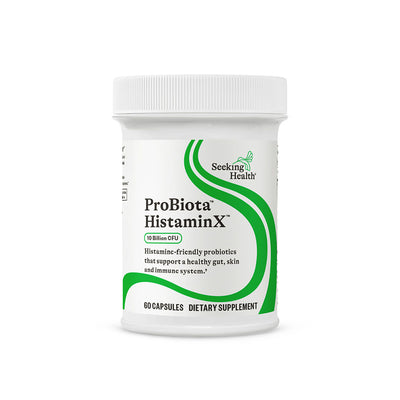
Take charge of your wellness and invest in the Seeking Health Histamine Bundle. This thoughtfully curated bundle combines high-quality supplements, including ProBiota™ HistaminX™, HistaminX™, Histamine Digest, and Histamine Nutrients, all formulated to support a balanced microbiome, healthy histamine response, and optimal immune function. Each product is gluten-free, third-party tested, and crafted with premium ingredients you can trust. With a 20% bundle discount, free shipping, and a FREE copy of Dirty Genes—The Histamine Workbook, you get trusted science and real value—making it easier than ever to prioritize your health without breaking the bank.†
The Bottom Line

Histamine is a natural part of your body, but too much can cause itchy, red, or swollen skin.
If you struggle with these symptoms, you’re not alone.
There are many ways to manage histamine-itchy skin, from changing your diet to using natural remedies and making lifestyle changes. Talk to your healthcare practitioner if you think histamine is causing your symptoms—they can help you find the best plan for you, including modifications to your daily habits or incorporating supplements into your healthy diet.†
Remember, you don’t have to scratch your way through life. With a little care and some simple changes, you can feel better in your own skin.
Read our Histamine Intolerance Guide to learn more about histamine intolerance and how you can support your wellbeing!
References:
- https://pubmed.ncbi.nlm.nih.gov/30224900/
- https://pubmed.ncbi.nlm.nih.gov/30150993/
- https://pubmed.ncbi.nlm.nih.gov/16402096/
- https://pubmed.ncbi.nlm.nih.gov/35327646/
- https://esmed.org/MRA/mra/article/view/6144
- https://pubmed.ncbi.nlm.nih.gov/38674909/
- https://pubmed.ncbi.nlm.nih.gov/31839770/
- https://pubmed.ncbi.nlm.nih.gov/23724226/
- https://pubmed.ncbi.nlm.nih.gov/39338343/
- https://biomedgrid.com/pdf/AJBSR.MS.ID.002937.pdf
- https://pubmed.ncbi.nlm.nih.gov/27590961/
- https://pubmed.ncbi.nlm.nih.gov/23157658/
†These statements have not been evaluated by the Food and Drug Administration (FDA). This product is not intended to diagnose, treat, cure, or prevent any disease.


